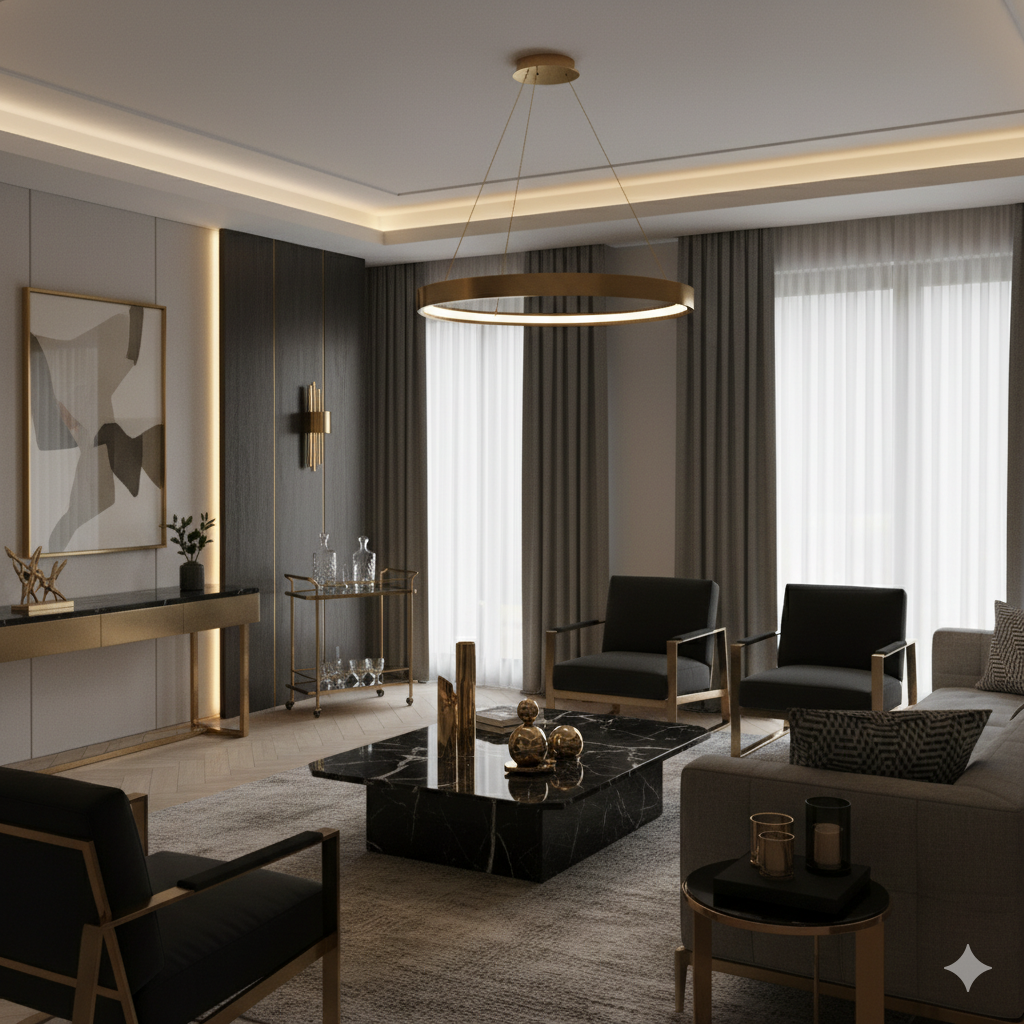
Material Guide
July 15, 20248 min
Using Brass in Decoration: Coating Types and Guide
The history of brass metal, its use in furniture and decoration, PVD vs electroplating differences, and color harmony guide.
Yükleniyor
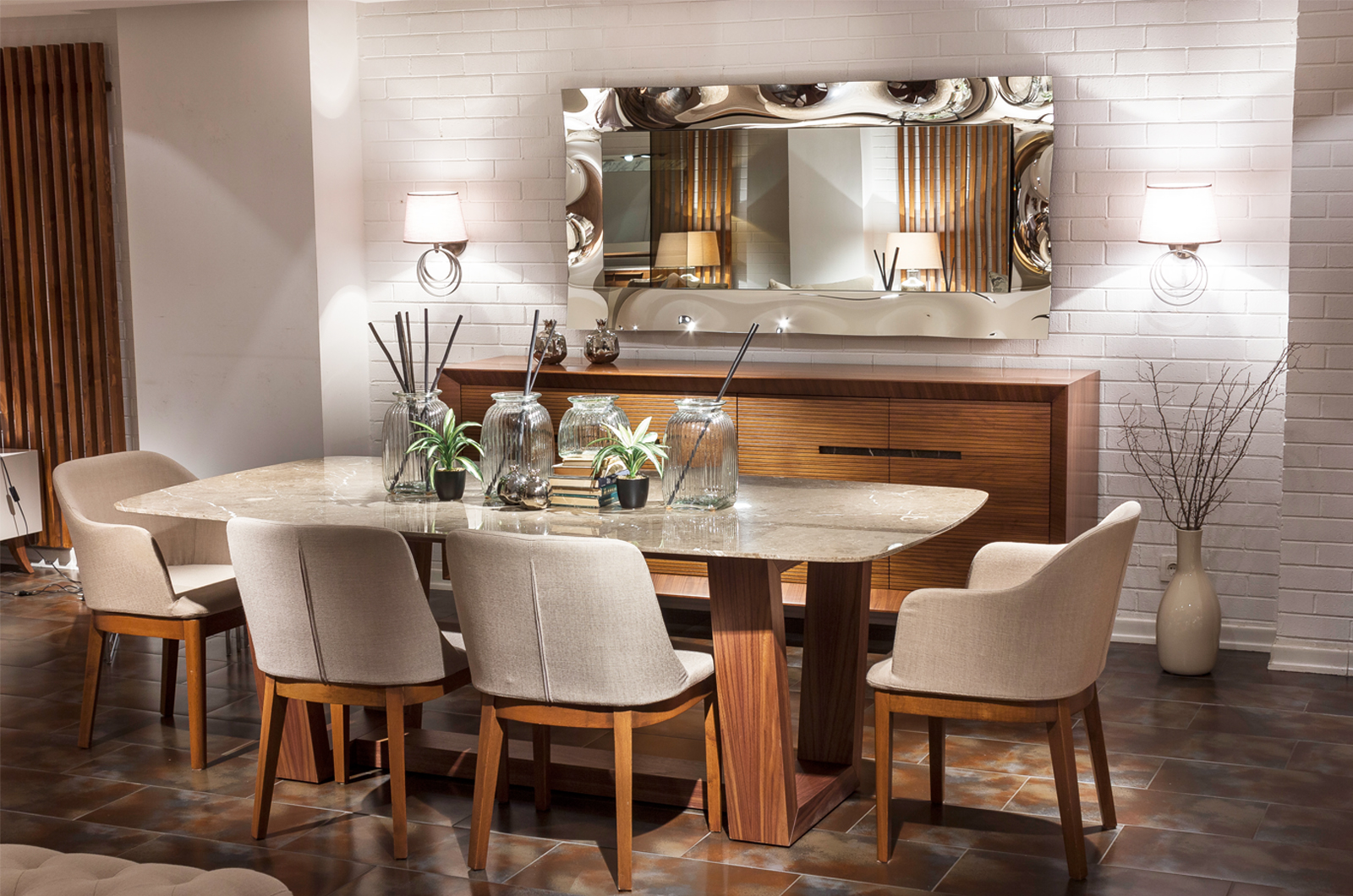
Marble has been one of humanity's most prized natural materials for thousands of years. From ancient Greek temples to Ottoman palaces, from Renaissance sculptures to modern luxury residences, marble has always served as a symbol of elegance and permanence. Today, the use of marble in furniture design spans a wide spectrum from minimalist lines to maximalist grandeur.
Quarried from the town of Carrara in Italy's Tuscany region, this marble is known for its grey-white tones and fine veining. Carrara — the stone Michelangelo used to carve the David — is frequently preferred in the furniture world for kitchen countertops, coffee tables, and console tables. Its soft tones allow it to blend with both classic and modern interiors. Carrara is more accessible in price compared to Calacatta and is suitable for large surface applications.
Also of Italian origin, Calacatta is often confused with Carrara but is far rarer and more valuable. It is distinguished by its thick, dramatic gold or grey veins on a white background. When used in dining tables and statement pieces, Calacatta adds extraordinary luxury to a space. Due to its limited extraction volume, it commands a high price and is generally preferred for bespoke projects.
Of Spanish origin, Emperador marble is known for its light-coloured veins against a dark brown background. It comes in two main variants: Dark Emperador and Light Emperador. Its warm tones create perfect harmony with wooden furniture, and it is particularly preferred for console tables, TV units, and bathroom vanities. Emperador adds depth and warmth to classic and traditional interiors.
Though not technically marble, travertine is one of the most widely used members of the natural stone family in the furniture world. It is recognised for its porous texture, earthy tones, and organic feel. Denizli travertine from Turkey has gained worldwide renown. It is frequently used in coffee tables, side tables, and decorative accessories. Depending on whether the pores are filled or left open, either a matte or polished surface can be achieved.
Onyx stands apart from other natural stones with its semi-translucent structure, creating a mesmerising visual effect when used with backlighting. It comes in green, honey, pink, and white tones. It is used in bar counters, illuminated console tables, and decorative panels. Due to its fragility, it requires careful craftsmanship and is generally preferred for small to medium-sized surfaces.
Ranked among the most prestigious Italian marbles alongside Calacatta, it is known for its distinct grey veins against a brilliant white background. When used in dining tables and coffee tables, it lends a distinctive character to modern minimalist designs.
Beyond natural marble, alternative materials have become widespread in furniture and interior design. Understanding the advantages and disadvantages of each is the key to making the right choice.
Natural Marble: With its unique veining and natural beauty, every piece is one-of-a-kind. Due to its porous structure, it can absorb stains and is sensitive to acidic liquids. It requires regular sealing maintenance. Over time, it develops a patina that enhances its character.
Engineered Stone: Manufactured from a mixture of natural stone fragments, resin, and pigment. More durable and easier to maintain than natural marble. Offers high colour and pattern consistency. However, it lacks the unique character of natural stone and may yellow over time.
Quartz: Made from 90-95% natural quartz crystals and polymer resin. Its non-porous structure means it resists stains and is extremely easy to maintain. Its heat resistance is lower than natural marble. In terms of design, it cannot fully replicate the organic beauty of natural stone.
Marble dining tables instantly transform a dining area into a luxurious experience. When thick marble slabs are combined with metal or wooden legs, timeless elegance emerges. Carrara or Statuario marble is ideal for white, bright spaces, while Emperador suits warm, classic atmospheres. An important consideration is marble's weight — it requires a robust substructure.
Marble coffee tables become the focal point of living areas. Combined with brass or black metal legs, an Art Deco effect can be created. Marble side tables add a sophisticated touch to bedrooms and living rooms. Travertine coffee tables have gained significant popularity in recent years with the organic minimalism movement.
Marble console tables used in entrance halls or against living room walls become the first luxurious touch that greets your guests. Thin marble slabs paired with elegant metal legs create pieces that are both decorative and functional.
The use of marble in bathrooms creates a spa-like atmosphere. Marble details in sink countertops, shower niches, and mirror frames elevate the bathroom to hotel-level comfort. Proper sealing treatment is critical in areas exposed to moisture and water.
Since natural marble is a porous material, its surface must be coated with a sealant. When you purchase or commission a new marble piece of furniture, the initial sealing should be done professionally. It should then be renewed every 6-12 months depending on usage intensity. A quality impregnating sealant closes the stone's pores to prevent liquid penetration.
Clean marble surfaces with pH-neutral stone cleaners or a mixture of warm water and mild soap. Acidic cleaners (vinegar, lemon juice, general-purpose spray cleaners) erode and dull the marble surface. Wiping the surface with a dry cloth after each use prevents water spot formation.
Wipe up spills immediately — especially acidic liquids like wine, coffee, lemon juice, and vinegar, which can leave permanent marks on marble surfaces. Using coasters and serving plates on dining tables prevents direct contact and extends the marble's lifespan. Hot pots and pans should never be placed directly on a marble surface.
Light scratches can be removed with marble polishing powder and a felt pad. Deep scratches or acid stains (etching) may require professional marble restoration. Annual professional polishing helps the marble maintain its original lustre.
Modern Minimalist: When white Carrara or Statuario marble is combined with black metal details, a timeless modern look emerges. Clean lines and broad surfaces are where this style meets marble.
Classic and Traditional: Emperador or dark-toned marbles combined with carved wooden legs and brass details create a magnificent classic atmosphere.
Art Deco: Green onyx or black-and-gold veined marbles paired with geometric metal forms revive the grandeur of the 1920s with modern interpretations.
Organic Minimalism: Travertine and earth-toned marbles combined with natural wood and linen textures create warm, serene spaces.
Luxury Contemporary: Calacatta marble, when used in large-scale pieces, creates a statement that defines the space's character. When balanced with neutral tones, sophisticated luxury is achieved.
Turkey ranks among the world's leading marble-exporting countries and holds approximately 33% of the world's total marble reserves. Anatolian lands — particularly Afyon, Bilecik, Burdur, Denizli, and Mugla — harbour marble in hundreds of different colours and patterns.
Denizli travertine is one of the most preferred natural stones worldwide. Afyon sugar marble, with its white colour and crystalline structure, is frequently used in international projects. Turkish marbles such as Mugla white, Bilecik beige, and Burdur beige are recognised and sought-after varieties around the globe.
This rich marble heritage provides Turkish furniture manufacturers with a unique advantage. High-quality marbles sourced locally offer advantages in both cost and logistics compared to imported alternatives.
Operating in Istanbul since 1981, Archidecors possesses deep expertise in marble furniture production. We carefully select each marble slab, considering its veining structure and colour transitions, creating symmetrical and striking surfaces using the book-matching technique.
By combining marble with materials such as brass, wood, and leather, we produce unique, bespoke furniture for every project. We offer marble craftsmanship across a wide product range — from bathroom countertops to dining tables, coffee tables to console tables.
Contact us to select the right marble type for your projects, establish a care plan, and design the marble furniture of your dreams. With our 45 years of experience, we bring nature's most noble material into your living spaces.
The history of brass metal, its use in furniture and decoration, PVD vs electroplating differences, and color harmony guide.
Health risks of VOC gases emitted from new furniture, waiting periods by paint type, and protection methods.
Our team of expert designers and craftsmen are ready to bring your vision to life.